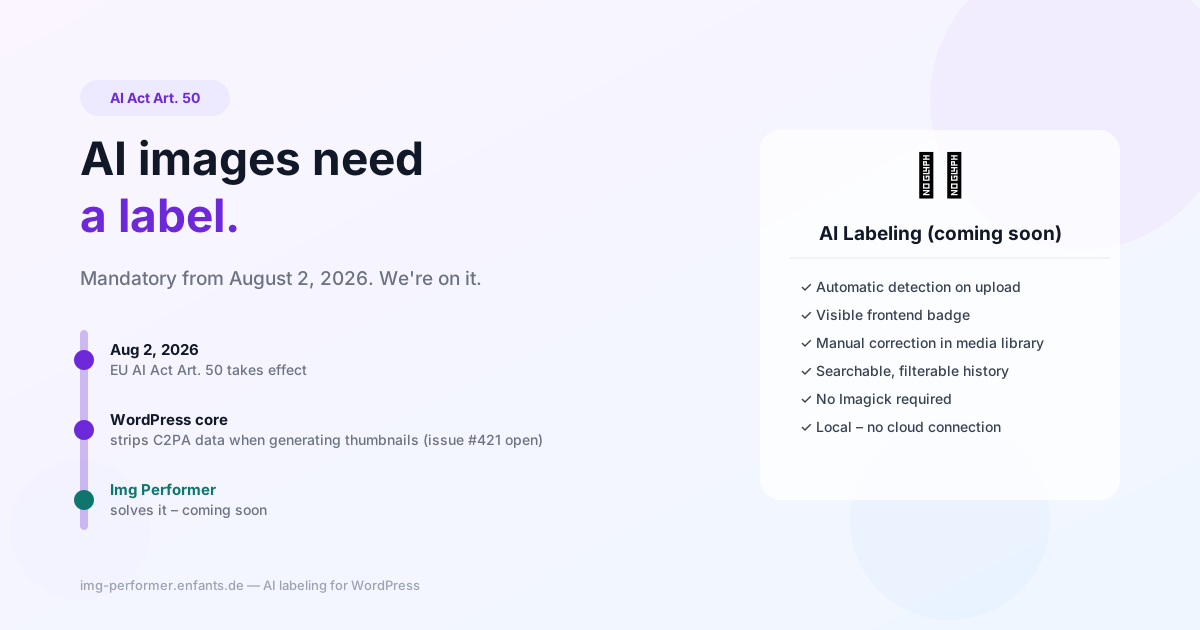
EU AI Act Art. 50: AI images must be labeled starting August 2
From August 2, 2026, AI-generated images must carry machine-readable labeling. WordPress core doesn't solve this — we're already working on making sure IMG Performer does.
On August 2, 2026, Article 50 of the EU AI Act comes into force. From then on, AI-generated images must carry machine-readable labeling — and deepfakes additionally need a label visible to visitors. Existing systems get a grace period until December 2, 2026 under the AI Omnibus, but the principle stands: if you publish AI images, you need a solution starting now.
Who this affects
Practically any website using AI-generated or AI-edited images — from DALL-E, Adobe Firefly, Midjourney, or similar tools. Non-compliance carries fines of up to €15 million or 3% of global annual turnover.
What’s actually required
The labeling must meet four criteria: effective, interoperable, robust, and tamper-resistant. The Code of Practice published by the EU Commission explicitly names C2PA as a format that meets these requirements — an open standard already supported by DALL-E 3, Adobe Firefly, Google Imagen, and some camera manufacturers.
The problem: WordPress core doesn’t help here
This is where it gets genuinely inconvenient for WordPress site owners: WordPress strips embedded C2PA metadata itself the moment it generates thumbnails on upload. The corresponding GitHub issue in the WordPress/ai repository has been open for months without a core team member picking it up. Upload an AI image, and you automatically lose the legally required labeling — for every single image size WordPress generates.
We’re not aware of any plugin that currently solves this specific problem.
What we’re building
We’re testing the implementation intensively right now: IMG Performer reads the AI provenance directly on upload — before WordPress destroys the metadata while generating thumbnails — and writes its own hosting-independent labeling back into every generated image size, based on the IPTC standard field “Digital Source Type,” which is internationally recognized. A fully signed C2PA manifest would require a certificate from the official C2PA Conformance Programme — a separate, months-long process we don’t currently offer. Our labeling meets the technology-neutral requirements from the Code of Practice (effective, interoperable, robust, tamper-resistant), but it is not a signed C2PA manifest. No Imagick required, works on any standard hosting.
What’s coming soon to IMG Performer Free:
- Automatic detection of newly uploaded images based on embedded AI provenance data
- Visible frontend badge, toggleable
- Manual correction directly in the media library, for the rare cases where automatic detection is uncertain
- Searchable, filterable history so you can see which images still need review
The machine-readable labeling itself needs no external software and no cloud connection — it runs entirely on your own server, like everything in IMG Performer.
What this means for you
There isn’t much time left until August 2. If you’re using AI images on your WordPress site, it’s worth taking a look at your media library now — and we’ll keep you posted here as soon as the feature is available.
Update: The feature has since shipped. We go into detail on exactly how WordPress loses the C2PA marking and how IMG Performer writes it back into every image size in Labeling AI images in WordPress: C2PA, thumbnails and the EU AI Act.