AVIF vs. WebP – what's the difference for your WordPress site?
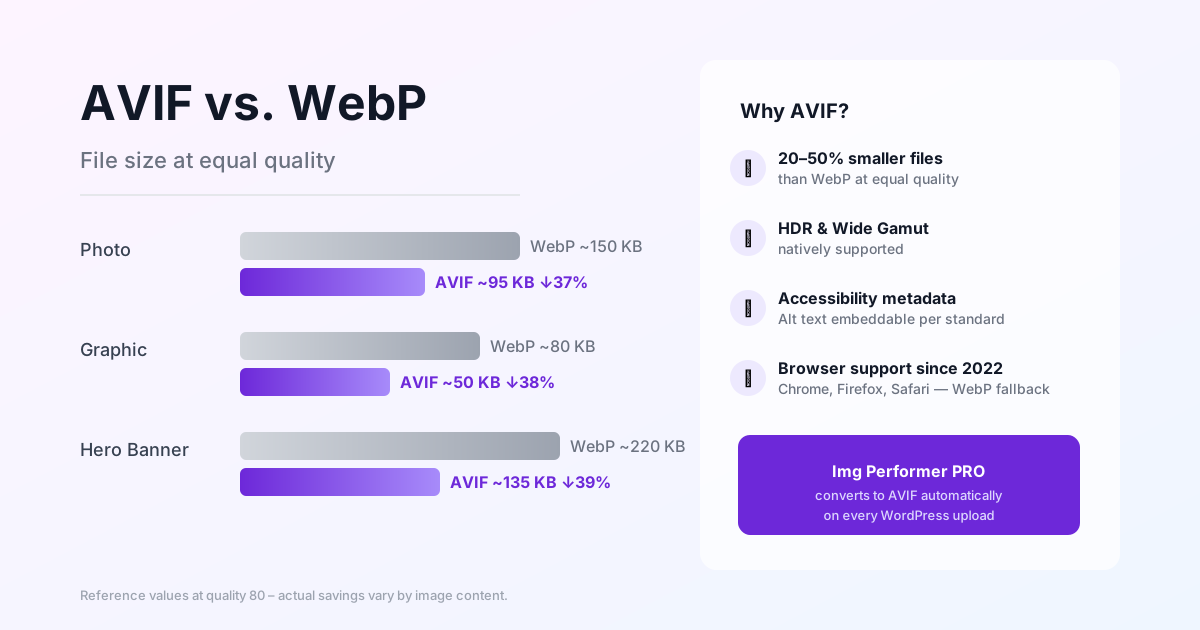
Both formats save bandwidth. But AVIF compresses significantly better — and is the only standard that also supports accessibility-relevant metadata.
WebP has been the standard for modern image optimisation in WordPress for years. Well-supported, fast to convert, no problems in any current browser. So why bother with AVIF?
What AVIF does better
AVIF (AV1 Image File Format) is the newer standard — developed by the Alliance for Open Media, the same people behind the AV1 video codec. In practice that means:
- 20–50% smaller files compared to WebP at equivalent quality
- Better compression for photos with many colour nuances
- HDR and wide gamut support natively built in
What that means for WordPress
Concretely: a product page with 10 images at 150 KB WebP each becomes 80–100 KB per image with AVIF. That’s up to 500 KB less per page load — without visible quality loss.
Core Web Vitals respond directly: Largest Contentful Paint improves because the hero image loads faster.
Browser support
AVIF has been supported by Chrome, Firefox, and Safari since 2022. Older browsers automatically get WebP as a fallback via the <picture> element — IMG Performer rewrites the srcset accordingly.
Accessibility: the hidden advantage
Unlike pure file-size optimisers, IMG Performer PRO also considers the accessibility angle: AVIF files can embed alt text and accessibility metadata in a standards-compliant way. This is relevant today — for public sector organisations and increasingly for commercial websites under the EAA.
Conclusion
WebP is good. AVIF is better — when the conversion is done right. IMG Performer PRO handles this automatically on every upload, without you having to worry about browser compatibility.